Sign up today

Sign up today
Softphone APP for Android &IOS

Beer is back on the menu, boys

 Beer is back on the menu, boys

Cartoonish illustration of a hand holding up a big beer mug

Niv Bavarsky

A proverbial ladybug just landed on the cracking-a-cold-one business: The number of drinks sold by Anheuser-Busch, the world’s largest brewer, increased last quarter for the first time in three years, the company reported yesterday, surprising analysts and suggesting that a broader chill in the beer industry may be thawing.

“Cheers to beer,” AB InBev CEO Michel Doukeris said of the promising results, which also included better-than-expected 12% revenue growth. Major gains in Latin American markets drove the beer beat:

  • The brewer’s Brazil unit notched record growth in sales volumes, sending shares of the Sao Paulo-listed subsidiary soaring by their most in almost 27 years.
  • AB InBev, which owns Corona and Modelo (except in the US), also exceeded expectations in Mexico, overtaking rival Heineken in the region.

But…that wasn’t enough to turn beer sales positive for the whole continent. In what could be interpreted by Big Ten students as a challenge, overall North American beer sales continued to fall, as persistent inflation and shifting health trends kept US shoppers away from the alcohol aisle.

Good thing AB InBev has expanded into beer that doesn’t get you drunk—revenue from its non-alcohol beverages jumped 27% in the quarter.

Sign of the imbibing times?

Along with AB InBev…

  • The Danish brewer Carlsberg recently reported that its beer volumes turned positive after rolling downhill last year.
  • Heineken’s total volumes also grew last quarter after falling in 2025, but the breakthrough was buoyed by sales of mixers and ciders. Heineken’s beer volumes actually fell from the same time last year.

Looking ahead…AB InBev said it’ll beat out both of those rivals this year. Much like other brewers, the company that slings Budweiser, Bud Light, Stella Artois, and Michelob Ultra—now the best-selling beer in the US—expects a significant summertime boost from World Cup festivities.

Snowbirds to be grounded following 2026 season until new aircraft arrive


Snowbirds to be grounded following the 2026 season until new aircraft arrive
Replacement planes are expected to arrive in the early 2030s, but no precise date or numbers have been given.


Murray Brewster · CBC News · Posted: May 19, 2026 8:19 AM PDT | Last Updated: 7 hours ago


Listen to this article
Estimated 6 minutes

The Canadian Snowbirds fly during the Fleet Week Air Show in San Francisco on Oct. 10, 2025. (Godofredo A. VásquezAP)

Social Sharing


Canada’s iconic Snowbirds demonstration squadron will be grounded following the 2026 flying season until new aircraft arrive, the country’s defence minister said Tuesday.

Speaking to the media at the home of 431 Squadron in Moose Jaw, Sask., David McGuinty did not say precisely how long it will take to replace the outdated CT-114 Tutor jets, which have been part of the Royal Canadian Air Force inventory since the 1960s.

Nor did the minister say how many new aircraft will be ordered.

The Swiss-made, turbo-prop CT-157 Siskin II has been chosen to replace the Snowbird squadron. The planes are already on order and are being delivered for use as the air force’s initial pilot training aircraft.

McGuinty said a contract for the Snowbird replacement has yet to be negotiated.

"Negotiations are underway with the manufacturer and we intend to procure those aircraft as quickly as we possibly can," he said.

The intention appears to be to tack on extra aircraft to the existing order, which means it could be the early 2030s before the Snowbirds are reformed and back performing at air shows.
WATCH | Carney says he 'inherited' aging Snowbirds:


Carney says he 'inherited' aging Snowbirds as Ottawa moves to sideline fleet after 2026 season
May 19|
Duration1:13Prime Minister Mark Carney said Canada's iconic Snowbirds demonstration squadron will be grounded after the 2026 flying season for safety purposes until new aircraft arrive. 'I inherited a situation where the planes literally had come to the end of their lives,' Carney said.

Prime Minister Mark Carney, speaking at a separate event in Quebec on Tuesday, said he understood the place the squadron occcupies in the hearts of most Canadian, but added the aircraft should have been replaced a long time ago.

"They're extraordinary, but I inherited this situation where the planes are literally at the end of their lives," Carney said. "The Snowbirds will continue and new planes are being commissioned and will arrive. Sometimes you inherit things that, you know — you move as fast as you can."

Lt.-Gen. Jamie Speiser-Blanchet, commander of the Royal Canadian Air Force, acknowledged that temporarily standing down the squadron was a tough call to make.

"This is a significant moment, and it is an emotional one because of the extraordinary connection that this team has built with Canadians over more than five and a half decades," Speiser-Blanchet said. "This decision was not taken lightly."

The lull in operations coincides with the introduction of the F-35 fighter fleet, and comes as the air forces also faces a major pilot shortage.
Federal defence minister says Snowbirds' future secure, Canadians can 'rest assured'

McGuinty said that during the downtime, the air force will continue to support air shows across the country, but will likely have to draw from operational fleets.

An association representing former Snowbird pilots said that while it understood the federal government's decision, it was still "profoundly disappointing," and members worried how the gap will affect the unique expertise required to perform the demonstration flights.

After a few years' hiatus, the air force could be forced to start from scratch to rebuild the team, said retired colonel Dan Dempsey, a former commander of the squadron.

"While the [Snowbirds Alumni] Association acknowledges the government's commitment to equip the Snowbirds with the new aircraft platform in the future, concerns remain regarding the loss of operational expertise and the prolonged interruption of one of Canada's most important military outreach programs during the transition," Dempsey sa

Dempsey also praised the technicians and contractors who've kept the CT-114 Tutor jets flying throughout the decades.

The association is also unhappy that a turbo-prop plane has been selected rather than a jet. Other G7 countries maintain air demonstration teams, but they fly jet aircraft.
'Engineering challenges' prevent extension

Two years ago, former defence minister Bill Blair ordered a review of military ships, aircraft and other items that have become difficult and costly to maintain — including the Snowbird squadron.

At the time, he said the six-decade-old CT-114 Tutor jets had been in service too long.

In 2020, work began to extend the life of the Tutor jets until 2030, but Speiser-Blanchet said that while most of the upgrades were delivered, it simply wasn't possible to carry on beyond this year.
WATCH | Snowbirds to be grounded for years after 2026:


Iconic Snowbirds to be grounded after 2026 season
10 hours ago|
Duration2:47Canada’s iconic Snowbirds will be grounded after the 2026 season until their outdated jets get replaced, possibly by the early 2030s, marking a turning point for Canada's iconic aerial ambassadors after more than five decades.

"Some of the airframe, engine and escape system program feasibility studies [that] were done ... [revealed] some engineering challenges because of the age of the aircraft that have changed that situation, and this is why it will be retiring in 2027 instead of 2030."

Military officials and aviation experts have warned for decades that the Tutors were operating far beyond their intended lifespan.

The jets were first ordered by the military in 1961 as training aircraft, a role from which they were retired in the early 2000s. Of the 191 planes originally ordered, roughly 26 are thought to remain in inventory or in storage.

The CT-114s began their demonstration career in 1967. They adopted the name Snowbirds in 1972 after a national competition among school children to name the squadron, and were formally designated as an aerobatics team in 1975.

In 2003, the air force was told that it needed to quickly replace the Tutors, which were considered well-maintained but ancient.

A study by the Defence Department's director of major service delivery procurement warned at the time that their lifespan would expire in 2010, but could be extended for another decade if absolutely necessary. Keeping the Tutor would pose "significant" risks, the 2003 report warned.

The Snowbirds kept flying, however.

A DND report in the fall of 2014 cleared the fleet as "technically airworthy," but noted significant concerns including some caused by financial restraints. That same evaluation said the Tutors could have had their lives extended to 2025.

Dave Perry, a defence analyst, said the decision to suspend the Snowbirds isn't surprising given the mutiple pressures the air force in facing, including introducing a wide range of new aircraft, and doing so with a shortage of personnel.

"You have to make some tough calls," said Perry, president of the Canadian Global Affairs Institute. "And I think this is probably one of those things, if they're really knuckle down, you could have kept that fleet going. But does it really make that much sense?"

ABOUT THE AUTHOR


Murray Brewster

Senior reporter, defence and security

Murray Brewster is senior defence writer for CBC News, based in Ottawa. He has covered the Canadian military and foreign policy from Parliament Hill for over a decade. Among other assignments, he spent a total of 15 months on the ground covering the Afghan war for The Canadian Press. Prior to that, he covered defence issues and politics for CP in Nova Scotia for 11 years and was bureau chief for Standard Broadcast News in Ottawa.

Canada Should Be Leading a Geothermal Power Boom


Canada Should Be Leading a Geothermal Power Boom
We have all it takes to wake a sleeping giant of clean energy. What’s in the way?

Rebecca Pearce TodayThe Tyee

Canadian geophysicist Rebecca Pearce is the science lead with the Cascade Institute’s Ultradeep Geothermal program at Royal Roads University.Our journalism is supported by readers like you. Click here to support The Tyee.

SHARE:


11
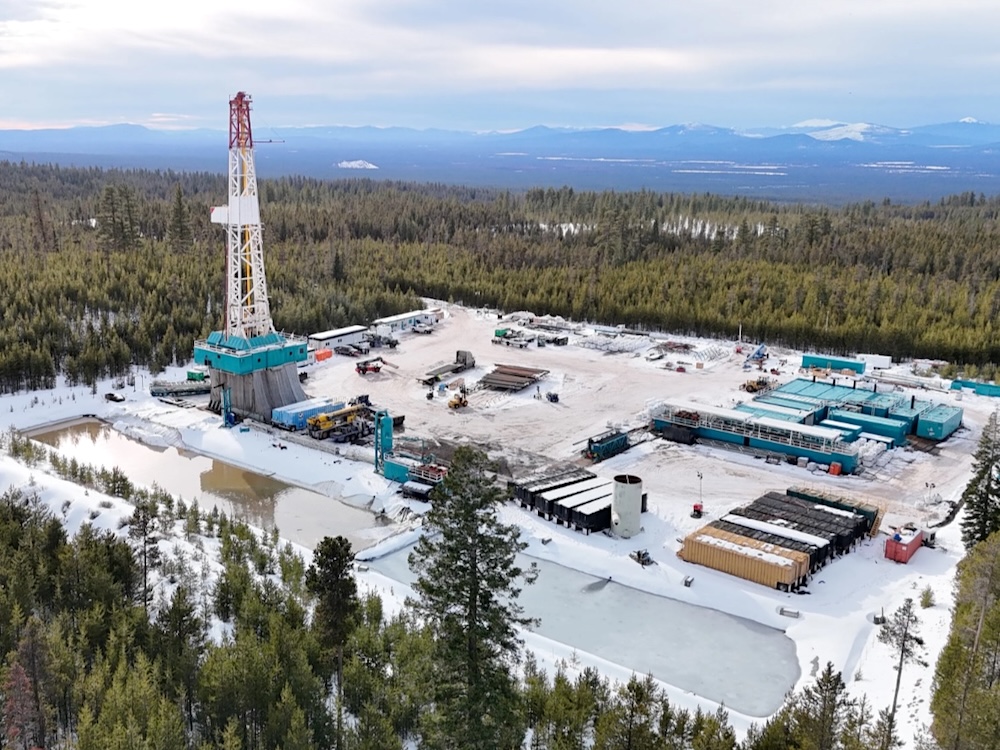
Oregon’s Newberry project uses Canadian expertise to show geothermal energy is far more doable than before. Photo via Newberry project.


Listen to this article
5 min


A day’s drive south of Vancouver, on the slopes of the Newberry Volcano in Oregon, a groundbreaking geothermal project has demonstrated the commercial viability of generating clean, secure electricity from hot dry rock.

Announcements, Events & more from Tyee and select partners
Hear Rachel Gilmore and More: A Tyee Event on Battling Online Lies

We’re calling it Reality Check LIVE. Get your ticket for May 21 in Vancouver.
The Tyee Is Recruiting Our Next Editor-in-Chief

Founding editor David Beers is passing the baton to a new leader. Is it you?

And this was achieved in subsurface conditions that occur here in Canada, with Canadian experts, using a drilling rig brought in from Grande Prairie, Alberta.

The Newberry project, led by Mazama Energy with funding from the U.S. Department of Energy, has successfully created an enhanced geothermal system that circulates water through hard rock at record-breaking temperatures of 331 C.

This project represents a major milestone towards producing geothermal energy from water hotter than 375 C, where water changes to a supercritical state that carries five times more energy than the subcritical water typically circulated in geothermal projects.

Enhanced geothermal systems generate electricity by using a pair of wells to circulate water through deep, hard rock, where it absorbs heat and then flows back to the surface to drive a turbine. These systems artificially create a geothermal reservoir several kilometres underground, making geothermal possible all over the world, rather than in select regions where geothermal reservoirs naturally occur.

Newberry is a successful proof of concept that this technology works, made possible by Canadian firms such as Pro-Pipe Service, Ensign Energy Services, Hephae and others. Yet none of these breakthroughs are occurring in Canada.

How is it that, despite our world-class expertise and abundant heat resources, Canada still does not have a single stand-alone geothermal power plant anywhere in the country? This is a classic example of how Canadian expertise is outsourced to other countries, aiding in major technological breakthroughs and economic development abroad, while our own domestic energy strategies stagnate.

Canadians are world-renowned for their drilling and subsurface development expertise, including for geothermal projects. One of the two lead researchers on Utah’s groundbreaking research initiative, the Frontier Observatory for Research in Geothermal Energy, John McLennan, is a Canadian engineer. And the Calgary-based geothermal firm Eavor just brought its flagship closed-loop heat and electricity project online — in Geretsried, Germany.

Clearly, we have the skills to unlock geothermal energy. And we have the heat, too.

The United States is the largest producer of geothermal electricity in the world, and most of those 3.9 gigawatts are produced in the Cascade Volcanic Arc that spans the western states — California, Idaho, Utah and Washington (think Mount St. Helens). Geology doesn’t stop at the border: these volcanic mountain ranges run all the way through B.C., Yukon and Alaska.


Will BC Electrify Its Economy? BC Hydro Doubts Itread more

B.C. is particularly blessed with near-surface geothermal resources like those found at the Newberry project. Since the 1970s, a series of studies by the Geological Survey of Canada has identified optimal locations for geothermal all across the province. One such site is Mount Meager, near Pemberton, where temperatures of 290 C were measured only three kilometres below the surface. In geothermal terms, that is like striking gold.

B.C. is primed to be a hotbed of geothermal innovation. To kick-start that innovation, we need a network of federal/provincial research facilities, with industry buy-in, to ultimately supply the province with clean, baseload power with minimal surface footprint. And the return on investment would be immense.

The Clean Air Task Force estimates that one per cent of the world’s superhot rock energy within eight kilometres of the surface would provide 68 terawatts of energy, eight times today’s total global electricity consumption. By pairing B.C.’s rich geothermal resources with Canadian subsurface engineering, Canada could unleash this novel energy supply at a critical moment of global energy insecurity.


How Can Canada Help Workers Through a Green Transition?read more

And the opportunity isn’t limited to superhot rock. As the Cascade Institute’s recent report “The Deep Heat Advantage” reveals, continued innovation in harnessing geothermal from the mid-range temperatures found in Alberta, Saskatchewan and the Northwest Territories could make geothermal competitive with solar and combined-cycle gas power. Canadian-led advancements in drilling, well design and reservoir creation technologies in our diverse range of geologies will bring us closer to the Earthshot of clean, secure baseload power, anywhere.

Canada has a competitive edge in geothermal energy — one that can truly make us an energy superpower. By deploying our own expertise towards geothermal innovation across our broad spectrum of geological settings, we can unlock vast resources of clean, firm, renewable heat and power. Canadians are already doing this around the world. It’s time to turn this expertise towards our own resources.

It’s time to wake the sleeping giant of Canadian geothermal.


Read more: Energy, Environment

Harvard deciding whether to give fewer A’s

  Harvard deciding whether to give fewer A’s

An aerial view of Harvard's campus

Brooks Kraft LLC/Getty Images

A type of inflation unrelated to the price of a Dunkin’ coffee is on the ballot at that one school “in Boston.” A Harvard faculty committee began a weeklong vote yesterday on whether to cap the number of A’s allowed per course in a bid to combat grade inflation.

The measure would limit professors to giving A grades to just a fifth of the class, plus four extra students. A rule that would tie honors to class rank instead of GPA is also on the ballot.

Make A’s great again

The proposed changes come as some faculty and external critics—including the Trump administration—say that A’s becoming more common than nepo babies on Ivy League campuses eroded the grade’s value as a marker of excellence.

  • A’s accounted for 60% of grades awarded to Harvard undergrads last year, compared with 25% in 2005.
  • Last year, 55 Harvard students tied for the school’s top GPA award, an honor that used to be clinched by one or two students per year.

Proponents of A austerity say it’ll motivate students to work harder, while making it easier for employers and grad schools to gauge their performance. But many undergrads and some faculty oppose mandated A scarcity, claiming it’ll pit classmates against each other and hurt Harvard students’ competitiveness.

Big picture: Supporters hope a grading overhaul at Harvard will spur other top schools to curb grade inflation.

Ten Commandments of Beercan Racing

 Ten Commandments of Beercan Racing

Rob Moore was only 58 years old when he succumbed to lung cancer on January 6, 2012. He was among the 20% of lung cancer victims with no history of smoking. During Rob's short tenure on the planet, he covered a lot of ground, and was both active in the sport and a popular contributor at the Latitude 38 publication.

Rob believed strongly that sailboat racing should be competitive and fun, and to encourage participation at all levels. To facilitate this desire, he penned the “Ten Commandments of Beercan Racing" which we annually share in his honor:

I) Thou shalt not take anything other than safety too seriously. If you can only remember one commandment, this is the one. Relax, have fun, and keep it light. Late to the start? So what. Over early? Big deal. No instructions? Improvise. Too windy? Quit. Not enough wind? Break out the beer. The point is to have fun, but stay safe. Like the ad says, "Safe boating is no accident." - Full report

It's crunch time for Canada's trade deal with the U.S. and Mexico

It's crunch time for Canada's trade deal with the U.S. and Mexico
Signs of life appear in talks on renewing CUSMA despite Trump administration's hard line on tariffs


Mike Crawley · CBC News · Posted: May 28, 2026 1:00 AM PDT | Last Updated: 5 hours ago


Listen to this article
Estimated 7 minutes

The Canada-U.S.-Mexico Agreement is up for a joint review on July 1 that will determine whether the deal is renewed or renegotiated. While the U.S. and Mexico are currently in talks and have two more rounds of meetings scheduled in the coming weeks, Canada and the U.S. have yet to begin formal negotiations. (Darryl Dyck/The Canadian Press)

Social Sharing


Sluggish trade negotiations between Canada and the U.S. are finally showing faint signs of life as a milestone looms for renewal of their three-way trade deal with Mexico.

The minister responsible for Canada-U.S. trade, Dominic LeBlanc, is planning to travel to Washington, D.C., for trade talks, although his spokespeople haven't confirmed a date.

Although the Canada-U.S.-Mexico Agreement (CUSMA) is due for its first-ever joint review on July 1, LeBlanc has held just one day of in-person talks over the past seven months with his Trump administration counterpart, U.S. Trade Representative Jamieson Greer.

The slow pace of negotiations, along with the way U.S. President Donald Trump's tariff regime has punched holes in the free-trade deal, have combined to raise doubts about the fate of an agreement that is crucial to the Canadian economy.
CUSMA talks may run past July 1 deadline, U.S. trade envoy saysJuly 1 date for CUSMA review a 'checkpoint ... not a cliff,' Canada's chief negotiator says

CUSMA covers roughly $1.3 trillion in annual Canada-U.S. trade in goods and services and currently shields a large swathe of Canadian exports from Trump's tariffs.

According to the text of the agreement, the three countries are to notify each other of changes they want made by next Monday, one month ahead of the formal review, which comes six years after the sweeping trade deal took effect.
WATCH | Top U.S. negotiator criticizes Canada's approach to trade talks:


Trump's trade rep calls out Canada for retaliating against tariffs
11 hours ago|
Duration0:54U.S. Trade Representative Jamieson Greer, the top trade official in the Trump administration, told an audience in Washington, D.C., on Tuesday that Canada is 'in a different spot' from other countries when it comes to negotiating trade deals. Greer said only two countries in the world chose to retaliate against the U.S. over tariffs: Canada and the People's Republic of China.

The U.S. and Mexico are holding two days of bilateral talks on CUSMA starting today and have scheduled two further rounds of negotiations in June and July.

Meanwhile, Greer is portraying Canada as far more recalcitrant in coming to the table — at least on terms acceptable to the Trump administration.
Greer criticizes Canada's retaliation on tariffs

"Canada's approach has been different," Greer told an audience at the Council on Foreign Relations in Washington on Tuesday.

"We've spent the past year and a half going to countries telling them we have to have some level of tariffs.

"Two countries in the world retaliated against us: the People's Republic of China and Canada. So they're just in a different spot, and it's hard to see necessarily where that ends."
AnalysisU.S. businesses love CUSMA. Why is Donald Trump threatening to pull out?FRONT BURNERWhy aren’t Canada and the U.S. officially talking trade?

The Carney government has looked to the CUSMA renewal talks as an opportunity to negotiate relief from Trump's tariffs.

In contrast, Greer and other Trump administration officials have repeatedly insisted that tariffs will be a fact of life for Canada, regardless of the free-trade deal.

Prime Minister Mark Carney and his minister responsible for Canada-U.S. trade, Dominic LeBlanc, leave a Liberal caucus meeting on Parliament Hill on Wednesday. (Spencer Colby/The Canadian Press)

The U.S. has also indicated it wants concessions from Canada — described by multiple sources as an "entry fee" — before it will begin substantive negotiations on CUSMA, Radio-Canada reported in April.

Those concessions include ending provincial boycotts of U.S. alcohol sales and scrapping the federal Online Streaming Act, which requires large providers like Netflix and Disney+ to contribute a share of their revenue to support the production of Canadian content.

"We have been clear and consistent with the United States that we are ready to launch the joint review the moment they are," LeBlanc's press secretary, Gabriel Brunet, said Wednesday in an email to CBC News.
Ottawa seeking 'real relief' from tariffs

Canada has put forward proposals with "the potential to generate hundreds of billions of dollars in economic value for American industries and workers in exchange for real relief from the unfair tariffs imposed on Canadian products," Brunet said.

So far, the only tariff relief the Trump administration is offering to Canada would apply only to steel and aluminum companies that commit to move production to the U.S.
Washington demanding 'entry fee' from Ottawa before trade talks: sourcesAnalysisHere are Canada's biggest points of leverage in tariff and trade talks with the U.S.

Eric Miller, a Canada-U.S. trade expert based in Washington, says the two countries have "some pretty fundamental areas of disagreement" before they can get down to the nitty-gritty of negotiating specific trade-offs.

"I think it's important that Canada move as quickly as possible to try to get a deal, but not in such a way that it is willing to take any deal," Miller told CBC News.
WATCH | Trump's envoy in Ottawa says Canada shouldn't expect freedom from tariffs:


Canada should expect tariffs to continue, U.S. ambassador says
May 24|
Duration2:41U.S. Ambassador Pete Hoekstra said the president has imposed tariffs on the whole world and Canada shouldn't expect to be an exception. The comments come as renewed discussion of Canada's Online Streaming Act adds to ongoing cross-border tension.

"Anybody can negotiate a bad deal quickly. But what Canada needs is a good deal," said Miller, president of Rideau Potomac Strategy Group, a consulting firm.

Miller does not believe it's particularly significant that Mexico is currently further ahead in its CUSMA renewal talks than Canada. However, he says the significance ramps up if Mexico reaches its own separate deal with the U.S., without Canada soon doing the same.

Mexico and Canada have been communicating directly about trade, although their annual two-way commerce in goods is around $56 billion, a mere fraction of each country's trade with the U.S.
Which Trump tariffs affect Canada now?Trump's man in Ottawa doesn't understand why Canadians are so frustrated right now

Any country can withdraw from CUSMA by giving six months' notice. Such a withdrawal by the U.S. would end the tariff exemption currently granted to most Canadian exports.

"President Trump is notoriously fickle and he could wake up and decide, 'You know what? I don't want to do this [tariff exemption] anymore', " Miller said.

Trump was in his first term as president when the U.S., Canada and Mexico negotiated CUSMA as a successor to the North American Free Trade Agreement. At the time, Trump hailed it as "the largest, most significant, modern, and balanced trade agreement in history."


Christopher Sands, director of the Center for Canadian Studies at Johns Hopkins University, says that when Trump has threatened to withdraw from CUSMA, something he first floated last fall, it's a bargaining tactic to try to win more concessions.

"Canada can play it cool, I think, as long as no one is actually withdrawing," Sands said in an interview.

"I think the U.S. is just going to keep trying to heap pressure on everyone to get as many concessions as possible before it says, 'Yes, we'll renew'," he said.
Canada must 'hold its ground': former negotiator

Steve Verheul, who was Canada's chief negotiator in the talks that led to the creation of CUSMA, says the review will have a profound impact on the country's economic future. He's urging the federal government to resist U.S. pressure for concessions.

"The U.S. is blaming Canada for the lack of movement, but the U.S. is putting Canada in a position where it has little room to move," Verheul said Wednesday on Parliament Hill, where he testified before the Senate committee on foreign affairs and international trade.

Verheul said there is broad support among Republicans in Congress, U.S. businesses and the American public for renewing the agreement.

"Over time, I believe pressures on the U.S. to come to a resolution will increase," Verheul told the Senate committee. "As uncomfortable as it may be, Canada needs to hold its ground."
Carney says U.S. trade talks will 'take some time,' vows Trump won't dictate the termsCarney names advisory committee on Canada-U.S. economic relations as CUSMA review nears

It's not precisely clear how the Canada-U.S. trade talks will proceed.

LeBlanc's press secretary declined to give any details of the minister's upcoming trip to Washington, including dates, who he'll be meeting with or the scope of any scheduled talks.

A spokesperson for the Office of the U.S. Trade Representative did not respond to a CBC News query on Wednesday about Greer's plans for negotiating with Canada.

CorrectionsA previous version of this story said that Dominic LeBlanc will travel to Washington next week. In fact, LeBlanc's spokesperson did not specify when the minister's trip will take place.
May 28, 2026 5:14 AM PDT

ABOUT THE AUTHOR


Mike Crawley

Correspondent

Mike Crawley is a correspondent for CBC News, based in Washington. He began his career as a newspaper reporter in B.C., spent six years as a freelance journalist in various parts of Africa, then joined the CBC in 2005. Mike reported on Ontario politics for 15 years. He was born and raised in Saint John, N.B.

RG Richardson Communications News

I am a business economist with interests in international trade worldwide through politics, money, banking and VOIP Communications. The author of RG Richardson City Guides has over 300 guides, including restaurants and finance.