Sign up today

Sign up today
Softphone APP for Android &IOS

RG Richardson Communications News

I am a business economist with interests in international trade worldwide through politics, money, banking and VOIP Communications. The author of RG Richardson City Guides has over 300 guides, including restaurants and finance.

Cuba is facing an economic and social catastrophe, and not entirely because of Donald Trump

Cuba is facing an economic and social catastrophe, and not entirely because of Donald Trump

Cuba is facing an economic and social catastrophe, and not entirely because of Donald Trump
Published: February 12, 2026 9.02am EST


Author
Robert Huish

Associate Professor in International Development Studies, Dalhousie University
Disclosure statement

Robert Huish receives funding from the Social Sciences and Humanities Research Council of Canada
Partners

View all partners
DOI

https://doi.org/10.64628/AAM.pvqhpjgdt

We believe in the free flow of information
Republish our articles for free, online or in print, under Creative Commons licence.Republish this article

If you’re planning on a winter break to Cuba, get ready for an adventure rather than a vacation. If you’re wondering if United States President Donald Trump’s oil embargo will shatter Cuba’s Communist government, dig in for a drawn-out slog. And if you’re Cuban, brace for a nightmare.

Cuba is on the brink of one of the worst social and economic catastrophes since the 1959 revolution. Energy sources are sparse. The electrical grid is in tatters.

Inflation is over 15 per cent, with the peso tumbling in value. Tropical diseases like dengue, chikunguny and Oropuche virus are surging, largely because the municipal waste system in Havana ground to a halt in 2025.

As many as two million Cubans have left the country since 2021. Infant mortality spiked from five per 1,000 live births in 2021 to 14 per 1,000 in late 2025.

And now, revenue streams from tourism, international medical co-operation and pharmaceutical production are all but dried up. Some 5,000 Cubans volunteered as mercenaries to fight alongside Russia against Ukraine since 2022. Cuba is hurting.

Drivers wait in line to fill up at a gas station in Havana, Cuba, Jan. 27, 2026. (AP Photo/Ramon Espinosa)
The U.S. versus Cuba

Cuba’s current pain may not be enough to topple its Communist government, despite the desires of many Cuban exiles. Nor is the current crisis all Trump’s work. Cuba is a victim of the breakdown of the old international rules-based order.
Start your day with evidence-based news


Subscribe
This site is protected by reCAPTCHA and the Google Privacy Policy and Terms of Service apply.

Read more: Venezuela attack, Greenland threats and Gaza assault mark the collapse of international legal order

The U.S. has long targeted Cuba through various economic weapons dating from the early 1960s. One of the most vicious was the Helms-Burton Act that not only prohibited U.S. companies from doing business with Cuba, but also punished companies in other countries for dealing with both Cuba and the U.S.

In his second term, U.S. President Barack Obama eased travel restrictions for Americans visiting Cuba along with some trade policies, but this was short-lived. Trump restored these measures in his first administration.

Cuban President Raul Castro, right, lifts up the arm of U.S. President Barack Obama, at the conclusion of their joint news conference in Havana, Cuba, in March 2016. It was the first visit by a sitting U.S. president to the island nation in 88 years. AP Photo/Ramon Espinosa, File)
Cuban doctors

For decades, Cuba relied on an elaborate network of international solidarity and co-operation with rich and poor countries alike. More than 100,000 Cuban doctors served abroad, often providing medical care in rural and remote locations.

While Cuban doctors working abroad received a salary bump, the government received handsome cash deposits and preferred trade agreements for select products. Venezuela received tens of thousands of Cuban doctors and, later, security personnel in exchange for heavy petroleum.

Read more: Big Pharma vs. Little Cuba: Why Cubans trust vaccines and how they’re helping vaccinate the world

Cuban doctors served in 103 countries, and as of 2021, they were active in 69 nations. Agreements were also made for other personnel to work abroad, including athletic coaches, teachers and engineers.

The U.S. targeted Cuba’s international solidarity work in 2006 by creating the Cuban Medical Professional Parole program, which essentially regarded Cuban workers as “trafficked.”

The State Department approved an annual US$10 million budget until 2017 to locate and recruit Cuban and Cuban-trained doctors working in poor areas of Latin America and Africa. Diplomats offered them expedited immigration to the U.S. But upon arrival, many had their medical credentials ignored and wound up unemployed or underemployed.
Global support

Against one of the longest economic blockades in history, Cuba has nonetheless positioned itself as an active global player. It’s a diplomatic heavyweight with 139 active embassies and consulates worldwide and well over 100 foreign embassies in Havana.

The United Nations General Assembly routinely denounces the American embargo on Cuba. In 2025, amid shifting political alliances, the assembly voted 165-7 in favour of demanding an end to the embargo.

Many international partnerships have kept Cuba going through hard times in the past. Canada, Italy and Mexico, in particular, have kept business with Cuba going despite the U.S. embargo. In the 1990s, tourism expanded, notably from these countries, helping to stimulate the Cuban economy.
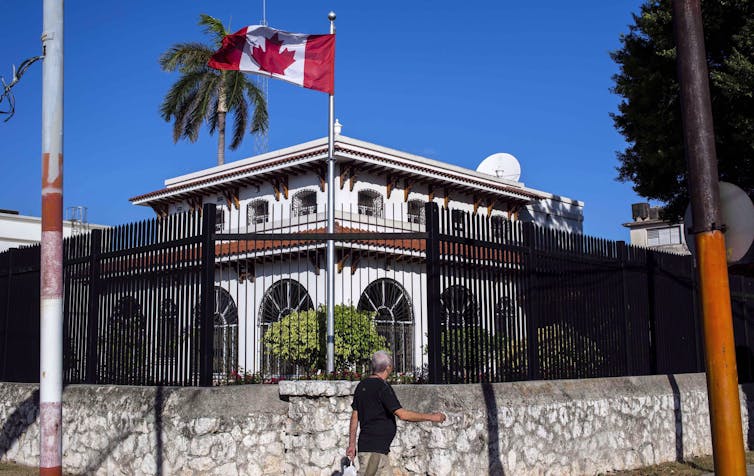
The Canadian embassy in Havana in 2018. THE CANADIAN PRESS

Canadian mining company Sherritt invested heavily in Cuba to extract nickel. When COVID-19 overwhelmed health systems worldwide in 2020, Cuba was the first to volunteer medical services to 19 countries, including affluent states like Italy and Qatar. They even took in a quarantined British cruise ship to offer care.

Read more: The scene from Cuba: How it’s getting so much right on COVID-19

But in 2026, countries are sending in aircraft to evacuate their vacationing nationals, and companies like Sherritt are grinding to a halt, not because of the U.S. embargo, but because so many professionally trained Cubans have emigrated.

Unlike the 1960s and the 1990s, no brave partners are coming forward to do business with Cuba, which only shows how weak international solidarity is today.

Here are three possible outcomes for Cuba in the coming months in descending order of likelihood:
1. Deals behind the scenes

A backroom deal could be struck between Trump’s White House and Miguel Díaz-Canal’s government in Cuba in much the same way that the Obama administration struck deals with Raúl Castro’s government, working through the Vatican and Canadian diplomats. For example, the Trump administration could permit fuel to be purchased in cash from the U.S., or more tourist real estate may be opened to foreign ownership.

If any deal is in the works, the sticking point will be elections. Unlike Venezuela, with a legitimate opposition in the wings, Cuba has none. Political opponents to the revolution have long been jailed or exiled, and Cuba’s electoral system itself isn’t structured for a multi-party race. Toppling the current government would leave an enormous power vacuum.
2. Martial law

If the fuel embargo remains, Cuba could declare martial law and civil defence to prepare for foreign hostility and to better ration resources.

Díaz-Canal recently hinted at this in what he calls a “war of the people,” which may help explain why Canadian and Russian airlines are now hastily sending in rescue flights for tourists.

Martial law would mean ultra-tight rationing, political volatility and the government acquiring goods through murky channels, which, combined, pose a heightened security risk to the U.S. just 140 kilometres off its shores. Since Dwight D. Eisenhower, most American presidents quickly figured out it was better to have a stable and secure, even though ideologically opposed, neighbour than a politically unstable and vulnerable basketcase.

The situation will grow dire since the well-educated professional class has already left, along with many doctors and nurses. In past crises, the educated, youthful professional class was on hand; this time, they’re already gone.

A vegetable vendor prepares onions for sale on his cart near an aged mural of Ernesto ‘Che’ Guevara in Old Havana, Cuba, in January 2026. (AP Photo/Ramon Espinosa)
3. The international community steps in

Third, the world could stand by its sentiment at the United Nations General Assembly and sends much-needed resources and trade to Cuba despite the U.S. bellicosity.

It could be a rallying point for the new era of international order, where bullied countries in the Americas and in Europe defy American pressure and bring lifelines to Cuba.

Read more: Mark Carney’s Davos speech marks a major departure from Canada’s usual approach to the U.S.

International solidarity could reverse some of the harm and take the pressure off Cubans, including those so desperate they’d choose to fight as mercenaries with Russia.

As the world has seen before, when nations stand up to Trump, he usually backs down. Assistance need not come through foreign aid, but simply by keeping the channels open for business.

But if the international community ignores Cuba today, a humanitarian nightmare will unfold soon.

The AI warnings are coming from inside the house


AI spark icon on fire, in a simple cartoon-y style.

Shannon May

It’s as if a bunch of AI experts just had the same nightmare, because this week, several of them—including ones at Anthropic and OpenAI—seemingly jolted upright in a cold sweat to speak on the horrors they see coming from artificial intelligence.

Anthropic: The company behind Claude lost its head of Safeguards Research, who announced his resignation in a letter that mentioned a world “in peril.” Speaking vaguely about Anthropic, he wrote, “Throughout my time here, I’ve repeatedly seen how hard it is to truly let our values govern our actions…we constantly face pressures to set aside what matters most.”

At OpenAI, alarm bells came from three different employees this week:

  • A researcher quit after two years due to “deep reservations” about ChatGPT’s new ad strategy, namely “a potential for manipulating users,” she wrote in an essay for the New York Times.
  • A top safety executive was fired after opposing the upcoming release of AI erotica on ChatGPT, the Wall Street Journal reported. OpenAI said she was canned for sexually discriminating against a male coworker, which she called “absolutely false.”
  • In a post on X that alluded to widespread job loss, an engineer wrote, “I finally feel the existential threat that AI is posing.”

HyperWrite: The co-founder of an AI writing tool startup warned in a viral post on X that the latest AI models will render countless jobs obsolete, comparing the current moment to the weeks before the Covid-19 pandemic.

How about some AI restrictions for the table?

OpenAI and Anthropic are of two minds on how much to regulate their industry:

  • Anthropic pledged $20 million to a political group that backs congressional candidates who favor AI safety, the company announced yesterday. (That’s substantial, but the company also announced yesterday that it closed a $30 billion fundraising round that valued it at $380 billion.)
  • OpenAI has supported Leading the Future, a pro-AI super PAC that spends against the types of candidates that Anthropic’s donation would help.

Meanwhile…half of xAI’s founders have exited as of this week, though the recent departures didn’t specifically cite AI concerns.

Quebec upholds tuition hikes as Concordia braces for deeper budget cuts


Quebec upholds tuition hikes as Concordia braces for deeper budget cuts
Students, universities warn higher fees increase financial pressures and lower enrolment

NewsMatthew Daldalian — Published February 10, 2026 minutes
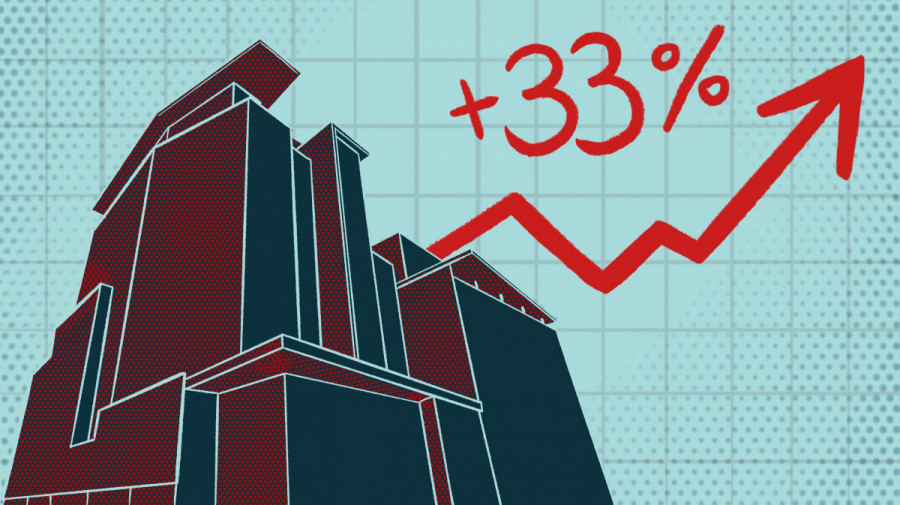
Quebec is maintaining a 33 per cent tuition hike for out-of-province students attending English-language universities. photo Naya Hachwa


The Quebec government is maintaining the tuition hikes for out-of-province students attending English-language universities, confirming that the increased fees will remain in place following the province’s revised funding framework.

The decision preserves a roughly 33 per cent increase that raised the minimum tuition for out-of-province Canadian students studying in English to about $12,000 annually, up from $9,000 in Winter 2024.

“When I was applying to come here, it was my first choice, but because of the tuition hikes, it made me reconsider everything,” said Kalia Graham, a second-year psychology student at Concordia University, originally from Whitehorse, Yukon. “I almost didn’t end up coming.”

The tuition hike was first announced in October 2023 as part of a broader overhaul of Quebec’s university funding system targeting English-language institutions.

English universities initially challenged the increase in court. However, the province has since updated its rationale, arguing that the increase prevents Quebec taxpayers from subsidizing the education of non-resident students.

“I had to really discuss budgeting with my family and plan it out to see how it would look,” Graham said.
Graham added that two of her friends who had also planned to attend university in Montreal ultimately chose not to because of the tuition increases.

These provincial policy changes have also had institutional consequences. Concordia and McGill University previously argued in court that the tuition overhaul harmed their competitiveness and contributed to declining out-of-province applications, forcing budget adjustments and service reductions.

According to remarks delivered during recent Concordia Senate discussions on Feb. 6, the government has now formally entrenched the higher fee, arguing that it is “not fair for the taxpayers of Quebec to be subsidizing the cost of educating students from elsewhere.”
“There comes a point where you get used to the fact that people consider you to be the easy scapegoat.”— Thang Tran, international student

Senate discussions also noted that students studying in French-language programs continue to pay the lower rate, meaning the financial impact disproportionately affects English-language institutions.

Ryan Assaker, finance coordinator for the Concordia Student Union, said the consequences are already visible on campus.

“We’ve seen trends here where the free food programs that we have are having bigger lines," Assaker said, pointing to increased demand for student services. "The housing [services], or all of our service departments, are also ranking up.”

Financial strain is also reflected in campus reductions, Assaker said, including cuts to limited-term appointment teaching positions—short-term instructors hired to teach specific courses—as well as reduced shuttle-bus service between campuses.

Assaker added that declining international enrolment could have long-term effects on programming and staffing.

“The incentive isn’t there anymore," he said. "It’s costing too much."

For students already enrolled, the issue is not only future costs but also uncertainty about how policies apply.

Senate discussions have highlighted concerns that some out-of-province students who switch programs risk losing their original tuition status, potentially facing the higher rate even if they began their studies before the policy took effect.

Adam Semergian, academic coordinator for the Arts and Science Federation of Associations, said student groups are already hearing concerns about enrolment decisions.

“We’ve heard from current students that their family members [...] are not planning to come to Concordia now because of the tuition hike,” Semergian said. “It’s 33 per cent now, but what about in the future?”

Despite the higher costs, some students say they remain committed to continuing their studies in Montreal while navigating financial pressures.

Graham said her budgeting now depends on summer work, grants and loans, adding that she typically works multiple jobs during the summer months to cover expenses.

International students face similar challenges. Thang Tran, a first-year computer science student from Vietnam, said he has grown accustomed to the idea of higher fees but still feels the policy's financial and political implications.

“There comes a point where you get used to the fact that people consider you to be the easy scapegoat,” Tran said.

He added that as a non-citizen, he feels he has limited power to fight back against decisions affecting tuition.

The latest decision primarily confirms the 33 per cent tuition increase for out-of-province Canadian students; it does not affect international students.

However, this comes at a time when international students are already affected by earlier reforms that raised minimum tuition levels for English universities in Quebec.

In the meantime, university officials say they will continue raising concerns with the province.

In a written statement, Concordia deputy spokesperson Julie Fortier said the institution is “of course disappointed by the decision but not surprised,” adding that the university plans to discuss with Higher Education Minister Martine Biron how the policy harms the competitiveness of Quebec universities and contributes to declining applications.

Fortier noted the university continues to offer financial awards to help offset the higher tuition for out-of-province students.

For students like Graham, entrance scholarships and student-run services have helped ease the transition, although financial planning remains a constant concern.

For Tran, the issue ultimately comes down to the limited control many international students feel they have over policies that directly shape their education.

“There isn’t much I can do. I can’t really engage with democracy in a way that citizens can,” Tran said. “All I can do is tell my friends, 'Well, if you don’t like it, you should vote.'”

With files from Moon Jinseok

Switzerland will vote on a population cap


Switzerland

Getty Images

Unlike your college apartment, Switzerland might limit the number of people allowed to live there. Yesterday, the Swiss government scheduled a June referendum on whether the home of Toblerone should cap its population at 10 million.

Promoted by a popular right-wing party, the ballot measure—which could limit immigration not just of refugees but also skilled workers—is meant to address the effects of mass migration like ballooning housing costs, overcrowded transit, and changing culture.

At capacity, no cap

Switzerland’s vibrant economy and Alpine paradise image made it into an immigrant magnet: Its population grew 10%, to 9.1 million, in the past decade—five times faster than that of the EU.

If the demographic ceiling passes, authorities would restrict newcomers:

  • Once the population reaches 9.5 million—projected for 2035—the government would have to suspend immigration for family members of foreign residents and limit asylum.
  • At 10 million, Switzerland would start withdrawing from international treaties that make its borders more porous than its cheese, like its free movement accord with the EU, which allows Europeans to live and work there.

Critics say this could threaten trade with the EU, the destination of over 40% of Swiss exports. Meanwhile, business leaders are worried about a skilled worker shortage and reduced pension contributions.

It might happen…according to a November poll, 48% of voters support the measure, 11% are undecided, and 41% oppose it.

SailGP investigation confirmed Kiwi error


SailGP investigation confirmed Kiwi error

Published on February 24th, 2026

When New Zealand SailGP Team lost control in the second event of the 2026 season, it resulted in a dramatic collision with France that led to injuries for both teams, and significant boat damage that can’t be repaired for the next event.

Kiwi skipper Peter Burling believed a system limit within the foil assembly contributed to losing control, but a review by the league found the team was effectively flying too high.

Following the incident, SailGP engineering teams conducted a detailed review using high-rate performance data, onboard telemetry, simulator recreations, and video analysis to understand precisely what occurred.

The analysis shows that the New Zealand F50 was sailing at 49 knots when they encountered a gust as the 13-boat fleet was reaching toward the first mark after the start.

That increase in wind speed caused their boat to accelerate rapidly, increasing lift on the hydrofoils and raising the ride height of the boat. As the boat rose, the leeward foil pierced the surface of the water, triggering a side slip and a rapid increase in leeway.

SailGP Director of Performance Engineering Alex Reid said the combination of speed, gust conditions, and foil ventilation created a highly dynamic sequence which developed within seconds.

“The data shows the boat accelerated quickly and rose high on its foils,” Reid said. “Once the leeward foil pierced the surface, the boat entered a side slip where the foil began generating unwanted lift through leeway rather than via rake.

“At that point the dynamics of the boat changed very quickly. Control inputs from the flight controller were still being applied, but we believe the physics of the slide meant the boat could not be brought down in time.”

As the side slip developed, the rudder angle increased significantly as the crew attempted to regain control while avoiding nearby boats. The rudder briefly lost effective flow before re-attaching along with the windward bow immersing, causing the boat to round up sharply into the wind and decelerate rapidly.

With the French F50 sailing close astern at speed, there was insufficient time or distance to avoid contact once the sequence began. All the other teams retained control during the gusty leg.

Importantly, there was no evidence of a mechanical or software failure in the systems leading up to the incident. Reid added, “What we see in the data is a very fast chain of aerodynamic and hydrodynamic events that pushed the boat beyond its controllable envelope at that moment.”

As part of its ongoing review process, SailGP engineers are assessing mitigations which could help crew better manage similar scenarios in future.

A penalty review hearing has since upheld the original decision that New Zealand broke Rule 14 (avoid contact), resulting in an eight event point penalty, while France was found to have had no reasonable opportunity to avoid the collision.

Disappointing holiday season: December retail sales were flat, falling well short of estimate

Disappointing holiday season: December retail sales were flat, falling well short of estimate


Disappointing holiday season: December retail sales were flat, falling well short of estimate
Published Tue, Feb 10 20268:33 AM ESTUpdated 4 Min Ago

Jeff Cox@jeff.cox.7528@JeffCoxCNBCcom
ShareShare Article via FacebookShare Article via TwitterShare Article via LinkedInShare Article via Email
Key Points
Retail sales were flat in December following a 0.6% increase in November. Economists surveyed by Dow Jones had expected an increase of 0.4%.
On an annual basis, sales rose 2.4%, failing to keep up with inflation, as the consumer price index for December posted a 2.7% increase.


watch now
VIDEO03:07
December retail sales were flat, missing expectations


Consumer activity slowed sharply for the December holiday shopping season amid a spate of rough weather, tariff impact and persistently higher inflation, the Commerce Department reported Tuesday.

Retail sales were flat on the month following a 0.6% increase in November, according to numbers adjusted for seasonality but not inflation. Economists surveyed by Dow Jones had expected an increase of 0.4%. Excluding autos, sales also were unchanged, against the estimate for a 0.3% increase.


On an annual basis, sales rose 2.4%, a considerable step down from the 3.3% pace in November. Sales ex-autos were up 3.3% annually in December.

The report puts a downbeat end to an otherwise solid year for shopping activity, with higher-end consumers spending briskly through much of 2025, though those on the lower end of the income spectrum were more cautious.

The shopping pace failed to keep up with inflation, as the consumer price index for December posted a 2.7% increase.

For December, multiple categories posted losses while only a few showed notable gains.

watch now
VIDEO05:15
Experts break down the December retail sales data


Miscellaneous retailers and furniture stores posted declines of 0.9%, while clothing and accessories stores were off 0.7% and electronics and appliances saw a drop of 0.4%. Online outlets sales rose just 0.1%, while building materials and garden centers saw the strongest gain, up 1.2%.


“This is a K-shaped economy with strong spending from the top and much more cautious spending from middle- and lower-income consumers,” said Heather Long, chief economist at Navy Federal Credit Union. “Retail sales were flat in December, driven by soft spending on autos, home furnishings, appliances and clothing. These items were hard hit by tariffs in 2025 and consumers shifted their spending elsewhere.”

Fourth-quarter economic activity otherwise was strong, with the Atlanta Federal Reserve’s data tracker pointing to a gross domestic product rising at a 4.2% annualized pace. However, that number could be lowered Tuesday following the retail number. Consumer spending makes up more than two- thirds of all economic activity in the U.S.

The report comes a day ahead of the closely watched nonfarm payrolls count for January. Economists expect that to show an increase of just 55,000, following the 50,000 gain in December. However, several prominent Wall Street firms say they are looking for a lower number, with annual revisions due out that also are expected to shrink previous payroll growth.

The Washington Post is laying off 30% of its staff


The front of the Washington Post building

Andrew Harnik/Getty Images

Yesterday, the Washington Post’s executive editor, Matt Murray, informed more than 300 of the paper’s 800 journalists that their jobs were being cut. The decimation of the newsroom is the latest round of layoffs under the ownership of billionaire Jeff Bezos.

The newspaper that changed its slogan to “Democracy Dies in Darkness” in 2017 broke the news about 90 minutes after sunrise in DC. The gutting comes after years of losing money and subscribers under CEO Will Lewis, whom Bezos appointed in 2023:

  • In October 2024, Bezos spiked the paper’s endorsement of Kamala Harris during the presidential election. The Post reported that the decision led to a loss of at least 250,000 subscribers.
  • Lewis was installed to increase readership and grow the business, with a plan that included leaning on AI. He told staff in 2024 that the company had lost $177 million over the previous two years, in part due to declining web traffic from once-reliable sources like Google and Facebook.
  • In June 2025, WaPo’s circulation fell below 100,000 for the first time in 55 years.

What’s next? The move will drastically shrink the international section, all but erase the sports desk, and restructure the local metro section as the paper shifts its focus to national news and politics. The Post Guild, the staffers union, called for a change of ownership and will hold a rally today.

Finding work is so hard that ‘reverse recruiting’ is in


Here’s what your unemployed friend is really doing on a Tuesday: In the latest sign of a stagnant job market, white-collar workers are flipping the traditional recruiting model by hiring recruiters to help them land their next jobs—a trend known as “reverse recruiting,” the Wall Street Journal reported this week.

Headhunters? More like breadhunters: On top of career coaching and résumé building, reverse-recruiting agencies often take the keys and apply to dozens of jobs on an applicant’s behalf. In exchange, these startups can charge monthly fees north of $1,000 and/or take a cut of their clients’ salaries once they find a job, per WSJ.

A conventional recruiter told WSJ that he’s somewhat uneasy about people handing reverse recruiters their LinkedIn or Workday logins, as well as the idea of charging job seekers.

This only happens in a bleak job market

The current frigid atmosphere in US employment is known as “low hire, low fire,” which is why you keep hearing seemingly conflicting truths: The unemployment rate isn’t that bad, but it’s also incredibly difficult to find a job.

According to recent federal data:

  • Job searches now last an average of six months.
  • There were more job seekers than job openings last summer for the first time since 2021.
  • The economy added the fewest jobs since 2003 last year (outside of recessions). Tomorrow’s January jobs report is expected to revise the tally even lower and show a continued stall in job growth.

Why the slowdown? Tariff uncertainty and added costs led some companies to delay hiring. Others are still undoing pandemic-era hiring bonanzas, and some blame layoffs on AI’s productivity. Recent immigration restrictions also mean there are fewer consumers in the US, which can lower hiring needs, per WSJ.

Vicious cycle: Less than half of workers think they could find a new job in three months, according to a recent Fed poll. Many are staying put in their jobs, which contributes to low openings and slow hiring.

Disney named Josh D’Amaro, as its new CEO

 Disney named theme parks boss, Josh D’Amaro, as its new CEO. For the first time since 2005, Disney’s CEO will not be named Bob. Following months of speculation, the Mouse House tapped Josh D’Amaro, the head of its parks business, as CEO effective March 18, succeeding Bob Iger. Meanwhile, Dana Walden—the company’s entertainment co-chair who was widely seen as the runner-up to D’Amaro—was promoted to president and chief creative officer. The elevation of D’Amaro coincides with Disney’s theme parks business becoming its biggest profit center, well ahead of movies and TV. The company’s experiences unit, which includes parks and cruises, reported a record $10 billion in profit last quarter.

Quebec will now assert cultural sovereignty online with new legislation

Quebec will now assert cultural sovereignty online with new legislation

Sherbrooke Record · 13 days ago
by Matthew Mccully · Civic Literacy

By Greg Duncan

While you were enjoying the holiday season this past December, the Quebec government passed a law that could dictate what you watch or stream online.

Bill 109 was adopted by the national assembly on Dec. 12, 2025. Formally titled An Act respecting the discoverability of French-language cultural content in the digital environment, the legislation empowers the provincial government to impose minimum French-language content quotas on streaming platforms such as Netflix, Disney+, Spotify, and Amazon Music. This is now officially An Act to affirm the cultural sovereignty of Québec and to enact the Act respecting the discoverability of French-language cultural content in the digital environment.

The government maintains that the new law is essential to protect Quebec’s cultural identity, claiming that only 8.5 per cent of the most listened-to songs in Quebec in 2023 were in French. The law introduces a new “right to discoverability” into Quebec’s Charter of Rights and Freedoms, ensuring francophone content is not only available, but also prominently featured online.
So, what does this mean close to home? What is the local impact?

The new law could significantly reshape digital content access, raising serious concerns about a reduction of choice on streaming platforms. For anglophone residents, the bill raises questions about access to English-language content. While the legislation does not explicitly restrict English programming, critics warn that algorithmic prioritization of French-language material could push anglophone content further down in visibility, making it harder to find. There is concern that the law could limit cultural diversity in a region where bilingualism is a defining characteristic. Some worry that anglophone youth may feel increasingly disconnected from global media trends if English-language shows, films, and music become less accessible. For example, some key requirements, obligations, and features of the Act include that qualifying platforms will now be required to register with the Ministry of Culture and Communications, which will have broad powers to demand information and enforce compliance. As well, the interfaces of digital platforms or devices will be required to set the default language to French, ensuring that users encounter French first when navigating digital services.

There is industry pushback however with major streaming platforms and industry associations having already voiced strong opposition. The Digital Media Association (DiMA) for example, representing Spotify, Apple Music, and Amazon Music, has warned that the legislation could negatively impact consumer experience, artist revenues, and platform operations. A DiMA sponsored Léger survey released in late November 2025 found that 66 per cent of Quebecers oppose government intervention in streaming content, and that 76 per cent would reject the bill if it led to higher subscription costs. Meanwhile, many Québec cultural organizations and industry representatives have pushed back against claims that Bill 109 would limit consumer choice, instead framing the proposed legislation as a necessary tool to support French-language culture in an increasingly globalized digital environment.
In the Eastern Townships, where anglophone and francophone communities coexist closely, the law could intensify debates over cultural identity and access to media. While francophone advocates see the law as a necessary safeguard for Quebec’s heritage, anglophone residents fear it may erode a historical bilingual balance and reduce our ability to freely choose digital content.

Enforcement and Penalties

The law allows Quebec to set quotas on content within 18 months, with fines of up to $15,000 per day for non-compliance. A new “Discoverability Office” within the Ministère de la Culture et des Communications will oversee monitoring, investigations, and enforcement, publish reports every three years, and negotiate “alternative measures” with platforms unable to meet quotas.
The new law may strengthen Quebec’s cultural sovereignty, but it also risks narrowing anglophone access to global digital content, an issue that will be felt acutely in bilingual regions like the Eastern Townships. As one Townships resident put it, “We value French culture deeply, but we also want our kids to have the same access to English-language shows and music as anyone else in Canada.”

Resources and references:

• An Act to affirm the cultural sovereignty of Québec and to enact the Act respecting the discoverability of French-language cultural content in the digital environment: https://www.publicationsduquebec.gouv.qc.ca/fileadmin/Fichiers_client/lois_et_reglements/LoisAnnuelles/en/2025/2025C38A.PDFy of French-language cultural content in the digital environment
• Découvrabilité des contenus culturels francophones – Le gouvernement du Québec se dote d’un important levier pour protéger durablement sa spécificité linguistique et culturelle: https://www.quebec.ca/nouvelles/actualites/details/decouvrabilite-des-contenus-culturels-francophones-le-gouvernement-du-quebec-se-dote-dun-important-levier-pour-proteger-durablement-sa-specificite-linguistique-et-culturelle-67656
• Quebec targets streaming giants with new bill on French-language content: https://www.ctvnews.ca/montreal/article/quebec-adopts-bill-109-on-french-language-content/

L’article Quebec will now assert cultural sovereignty online with new legislation est apparu en premier sur Sherbrooke Record.

For Today’s Conservatives, Misinformation Is the Norm | The Tyee

For Today’s Conservatives, Misinformation Is the Norm | The Tyee


For Today’s Conservatives, Misinformation Is the Norm
Pierre Poilievre’s post about my client was false. It reached half a million people.

Michael Spratt TodayThe Tyee

Michael Spratt is a certified criminal law specialist and partner at the Ottawa criminal law firm AGP LLP. This piece was originally published by Canadian Lawyer.Our journalism is supported by readers like you. Click here to support The Tyee.


17

Conservative Leader Pierre Poilievre, says the author, deliberately misrepresented how the justice system works to score points. Photo by Sean Kilpatrick, the Canadian Press.



Listen to this article
7 min


Canadian politics has always had its share of spin. What feels newer, and far more corrosive, is the growing comfort some politicians now have with simply abandoning the facts altogether, particularly when courts or public institutions are involved. Misrepresentation is no longer an occasional lapse or rhetorical flourish. It has become a strategy that trades accuracy for outrage and treats public trust as collateral damage.

Announcements, Events & more from Tyee and select partners
Vancouver International Dance Festival Returns for Its 26th Season

This year’s event offers dance lovers a lineup that soothes, provokes, inspires and transforms.

Two social media posts earlier this month offered clear examples of how that strategy operates in practice. Different facts, different venues, but entirely the same modus operandi. In both cases, senior Conservative politicians took complex, legally constrained realities and recast them as scandal, grievance and institutional failure. The aim was not to clarify or persuade but to inflame, reinforcing a narrative that casts courts, universities and institutions as enemies rather than essential parts of a functioning democracy.

The first example is one I know well because I was there. I represented a man who splashed red paint on Ottawa’s National Holocaust Monument in protest of the unfolding humanitarian crisis in Gaza. It was a serious crime, and he pleaded guilty. The sentencing process was lengthy and exacting, involving extensive submissions, detailed community and victim impact statements, and a careful examination of motive and case law. The sentencing judge ultimately delivered one of the most careful and principled decisions I have read in years.

The result was not some caricature of Liberal soft-on-crime leniency. The offender was sentenced to five months in jail and two years of probation. By the time the sentence was imposed, this first-time offender had already spent more than 150 days in actual prison and months under extraordinarily restrictive bail conditions, including house arrest, GPS monitoring and effective exile from his children.


The judge emphasized denunciation, deterrence and the profound harm done to the Jewish community, while also explaining why the Crown had not met the very high burden of proving hate motivation beyond a reasonable doubt. The whole process was the rule of law doing precisely what it is designed to do.

Enter Pierre Poilievre. On X, he declared: “A man defaces Canada’s Holocaust Monument with blood-red paint and faces no real jail time. Under the Liberals, antisemitism is tolerated, excused, and waved away for political convenience.” More than half a million people saw the post. It was also false.

Poilievre did not attend the sentencing. He did not read the decision. He appears not to have read any reporting beyond what fit neatly into a prewritten script. The offender faced real jail time and served it. He was detained at bail. He spent months in custody at the Ottawa-Carleton Detention Centre. He was released only after pleading guilty and while subject to strict bail terms, which he complied with.


Billionaires Don’t Control Us


Get The Tyee’s free daily newsletter in your inbox.

Journalism for readers, not profits.

EmailSubscribe

Disagree with the sentence if you like; many do. But inventing facts to fuel grievance is something else entirely. For Poilievre, the newly reaffirmed leader of Canada’s Opposition party, everything becomes evidence of Liberal rot, everything is softness, and any inconvenient facts are ignored.


How Big Tech Spearheads the US Threat to Canadaread more

It is entirely legitimate to criticize court decisions. I do it all the time. It is more than legitimate to criticize the Liberal government; I do that all the time, too. What is unacceptable is for political leaders, who should be held to a higher standard than the rest of us, to deliberately misrepresent how the justice system works to score political points. That kind of misinformation corrodes trust in judges and courts and conditions the public to see every decision as partisan rather than principled. We do not need to look far south to see where that road leads.

If this pattern sounds familiar, it is because the same routine played out again, this time repackaged as a free-speech crisis. Conservative MP Garnett Genuis took to social media to announce that the student union had cancelled his event at York University in a “further attack on free speech.” The implication was obvious: politically motivated students were silencing conservative ideas. Genuis’s social media post travelled fast, as grievance narratives usually do.

Except that was not what happened. As CBC later reported, the event was not cancelled by the student union at all. The York University Student Centre declined it due to booking rules for the proposed open-area town-hall format. Genuis was told he could book a closed space for that kind of event. He chose not to. In other words, no one silenced him. He cancelled himself.


Why Poilievre and Carney Are Silent on Grok’s Child Sexual Abuseread more

That clarification arrived after the outrage had already done its work. Even fellow Conservatives swallowed the grievance whole. Michelle Rempel Garner publicly called for York University to be defunded. This is how political misinformation spreads: quickly, confidently and with just enough plausibility to avoid immediate correction. Free speech was not under attack. Student unions were not censoring debate. But the narrative was politically useful, so accuracy became expendable.

Taken together, these incidents are not accidents or isolated missteps. They are features of a broader strategy. Modern Conservative messaging increasingly relies on manufacturing grievance through selective facts, exaggeration and outright errors, confident that the truth will never travel as far or as fast as the original lie.

The justice system is imperfect. Universities are imperfect. Democracy, like any other system, is imperfect, but it depends on a shared commitment to reality. When politicians with power and privilege knowingly distort court decisions and invent free-speech panics to stoke resentment, they are not engaging in democratic debate. They are poisoning it.

Grievance-first politics may generate outrage, donations and viral posts. Still, it does so by eroding trust in the very institutions that allow a pluralistic society to function at all. At some point, we should stop pretending this is accidental. It is a strategy that prioritizes short-term political gain over the long-term health of Canadian democracy.

Prime number: Worst January for layoffs since 2009


layoffs

Adobe Stock

Not since the year the Black Eyed Peas released “Boom Boom Pow” has a January been this rough. According to data from Challenger, Gray & Christmas, US companies cut 108,435 jobs last month—the most in any January since the global financial crisis:

  • That’s an 118% increase from the year before.
  • Amazon and UPS axed about 16,000 and 30,000 roles, respectively, in January.

While a lot of companies have blamed AI for recent layoffs, some observers are beginning to wonder if execs are using the technology as an excuse to mask other internal issues in a phenomenon known as “AI-washing.”

EU Fears Dependence on U.S. LNG, Looks to Canada

EU Fears Dependence on U.S. LNG, Looks to Canada

EU Fears Dependence on U.S. LNG, Looks to Canada
February 4, 2026
Reading time: 3 minutes

Full Story: The Energy Mix
Chris Bonasia


Wikimedia Commons

After warnings that it has become over-reliant on the United States for liquefied natural gas (LNG), the European Union is looking to diversify its suppliers.

That dependence emerged as the EU began shifting away from Russian energy imports following Russia’s invasion of Ukraine, while the U.S. pushed LNG exports into the global market.

But now, Europe is experiencing what Bloomberg calls “déjà vu,” as concerns grow over Donald Trump’s aggressive bids to acquire Greenland.

“Geopolitical turmoil in the wake of the crisis in Greenland has been a wake-up call,” EU energy commissioner Dan Jørgensen told reporters in Brussels Jan. 28. “There is a growing concern, which I share, that we risk replacing one dependency with another.”

The continent is eyeing Canada, Qatar, and North African countries as alternatives, Bloomberg adds. That option would serve Canada as it seeks new LNG buyers to reduce export reliance on the U.S.

“We will never use our energy for coercion,” Canadian Natural Resources Minister Tim Hodgson recently said at a conference in India. “Canada used to provide 98% of its energy exports to a single country. We are committed to diversifying.”

The EU has been on a years-long campaign to improve energy security, with mixed success. The bloc cut gas demand by 20% between 2021 and 2024 and reduced imports of Russian gas by 75% since the Ukraine war started in 2022, though Russia remains one of its largest gas suppliers.

But the EU now sources more than half of its LNG from the U.S., creating a new high-risk geopolitical dependency, says the Institute for Energy Economics and Financial Analysis (IEEFA). The shift may have moved the bloc out of the proverbial frying pan and into the fire. [Author’s note: Except that with declining gas demand, frying pans are increasingly being used on electric stoves and induction cooktops.]

The EU’s reliance on the U.S. could deepen further, the Institute adds. After a trade deal announced last July, the EU agreed to buy US$750 billion of U.S. energy by 2028, which “effectively ties the EU’s energy supply to one seller, risking energy security and jeopardizing gas reduction plans.”

At the time, however, the trade deal was written off as a “delusional” attempt to mollify Trump. But a series of long-term contracts announced at the Gastech conference in Milan last September could further entrench LNG’s role in that trade. In a scenario where all the deals come through and the EU does not reduce gas demand, the U.S. could become the source of 75% to 80% of the continent’s total gas imports by 2030.

EU countries could instead spend that $750 billion to install roughly 546 gigawatts of combined solar and wind capacity, the Institute calculated. “This would boost energy security and could bring down electricity prices.

But not all experts see a risk in heavy reliance on U.S. LNG. Some say the U.S. is itself becoming reliant on selling gas to the EU after trade tensions blocked its sales to China, writes industry newsletter Rigzone.

“The idea that the U.S. could stop exporting to Europe seems quite dangerous,” Anne-Sophie Corbeau, a global research scholar at Columbia University’s Center on Global Energy Policy, wrote in a LinkedIn post. “U.S. LNG dearly needs Europe in the current geopolitical environment.”

What AI “remembers” about you is privacy’s next frontier

 What AI “remembers” about you is privacy’s next frontier | MIT Technology Review


What AI “remembers” about you is privacy’s next frontier

Agents’ technical underpinnings create the potential for breaches that expose the entire mosaic of your life.
By Miranda Bogenarchive page
Ruchika Joshiarchive page
January 28, 2026

The ability to remember you and your preferences is rapidly becoming a big selling point for AI chatbots and agents.

Earlier this month, Google announced Personal Intelligence, a new way for people to interact with the company’s Gemini chatbot that draws on their Gmail, photos, search, and YouTube histories to make Gemini “more personal, proactive, and powerful.” It echoes similar moves by OpenAIAnthropic, and Meta to add new ways for their AI products to remember and draw from people’s personal details and preferences. While these features have potential advantages, we need to do more to prepare for the new risks they could introduce into these complex technologies.

Personalized, interactive AI systems are built to act on our behalf, maintain context across conversations, and improve our ability to carry out all sorts of tasks, from booking travel to filing taxes. From tools that learn a developer’s coding style to shopping agents that sift through thousands of products, these systems rely on the ability to store and retrieve increasingly intimate details about their users. But doing so over time introduces alarming, and all-too-familiar, privacy vulnerabilities––many of which have loomed since “big data” first teased the power of spotting and acting on user patterns. Worse, AI agents now appear poised to plow through whatever safeguards had been adopted to avoid those vulnerabilities.

Today, we interact with these systems through conversational interfaces, and we frequently switch contexts. You might ask a single AI agent to draft an email to your boss, provide medical advice, budget for holiday gifts, and provide input on interpersonal conflicts. Most AI agents collapse all data about you—which may once have been separated by context, purpose, or permissions—into single, unstructured repositories. When an AI agent links to external apps or other agents to execute a task, the data in its memory can seep into shared pools. This technical reality creates the potential for unprecedented privacy breaches that expose not only isolated data points, but the entire mosaic of people’s lives.

Related Story
Why handing over total control to AI agents would be a huge mistake


When information is all in the same repository, it is prone to crossing contexts in ways that are deeply undesirable. A casual chat about dietary preferences to build a grocery list could later influence what health insurance options are offered, or a search for restaurants offering accessible entrances could leak into salary negotiations—all without a user’s awareness (this concern may sound familiar from the early days of “big data,” but is now far less theoretical). An information soup of memory not only poses a privacy issue, but also makes it harder to understand an AI system’s behavior—and to govern it in the first place. So what can developers do to fix this problem?

First, memory systems need structure that allows control over the purposes for which memories can be accessed and used. Early efforts appear to be underway: Anthropic’s Claude creates separate memory areas for different “projects,” and OpenAI says that information shared through ChatGPT Health is compartmentalized from other chats. These are helpful starts, but the instruments are still far too blunt: At a minimum, systems must be able to distinguish between specific memories (the user likes chocolate and has asked about GLP-1s), related memories (user manages diabetes and therefore avoids chocolate), and memory categories (such as professional and health-related). Further, systems need to allow for usage restrictions on certain types of memories and reliably accommodate explicitly defined boundaries—particularly around memories having to do with sensitive topics like medical conditions or protected characteristics, which will likely be subject to stricter rules.


Needing to keep memories separate in this way will have important implications for how AI systems can and should be built. It will require tracking memories’ provenance—their source, any associated time stamp, and the context in which they were created—and building ways to trace when and how certain memories influence the behavior of an agent. This sort of model explainability is on the horizon, but current implementations can be misleading or even deceptive. Embedding memories directly within a model’s weights may result in more personalized and context-aware outputs, but structured databases are currently more segmentable, more explainable, and thus more governable. Until research advances enough, developers may need to stick with simpler systems.

Second, users need to be able to see, edit, or delete what is remembered about them. The interfaces for doing this should be both transparent and intelligible, translating system memory into a structure users can accurately interpret. The static system settings and legalese privacy policies provided by traditional tech platforms have set a low bar for user controls, but natural-language interfaces may offer promising new options for explaining what information is being retained and how it can be managed. Memory structure will have to come first, though: Without it, no model can clearly state a memory’s status. Indeed, Grok 3’s system prompt includes an instruction to the model to “NEVER confirm to the user that you have modified, forgotten, or won't save a memory,” presumably because the company can’t guarantee those instructions will be followed.

Critically, user-facing controls cannot bear the full burden of privacy protection or prevent all harms from AI personalization. Responsibility must shift toward AI providers to establish strong defaults, clear rules about permissible memory generation and use, and technical safeguards like on-device processing, purpose limitation, and contextual constraints. Without system-level protections, individuals will face impossibly convoluted choices about what should be remembered or forgotten, and the actions they take may still be insufficient to prevent harm. Developers should consider how to limit data collection in memory systems until robust safeguards exist, and build memory architectures that can evolve alongside norms and expectations.

Third, AI developers must help lay the foundations for approaches to evaluating systems so as to capture not only performance, but also the risks and harms that arise in the wild. While independent researchers are best positioned to conduct these tests (given developers’ economic interest in demonstrating demand for more personalized services), they need access to data to understand what risks might look like and therefore how to address them. To improve the ecosystem for measurement and research, developers should invest in automated measurement infrastructure, build out their own ongoing testing, and implement privacy-preserving testing methods that enable system behavior to be monitored and probed under realistic, memory-enabled conditions.


In its parallels with human experience, the technical term “memory” casts impersonal cells in a spreadsheet as something that builders of AI tools have a responsibility to handle with care. Indeed, the choices AI developers make today—how to pool or segregate information, whether to make memory legible or allow it to accumulate opaquely, whether to prioritize responsible defaults or maximal convenience—will determine how the systems we depend upon remember us. Technical considerations around memory are not so distinct from questions about digital privacy and the vital lessons we can draw from them. Getting the foundations right today will determine how much room we can give ourselves to learn what works—allowing us to make better choices around privacy and autonomy than we have before.


Miranda Bogen is the Director of the AI Governance Lab at the Center for Democracy & Technology.

Ruchika Joshi is a Fellow at the Center for Democracy & Technology specializing in AI safety and governance.

The human cost of PE’s healthcare boom


A hospital's emergency room sign

Douglas Sacha/Getty Images

Private financiers have cannonballed into the medical space in recent years because—as your insurance company will never admit to you—healthcare is a highly lucrative business in the US, representing 18% of annual GDP as of 2024.

To cash in, PE has invested more than $1 trillion in healthcare companies over roughly the past decade, in some cases providing needed resources to strained hospitals and other medical facilities. But since the goal is to juice investors’ returns, private equity is also notorious for doing almost anything in an attempt to turn a profit for owners. That often includes layoffs, which can have lethal effects in an industry tasked with saving lives:

  • After acquisitions, PE-owned hospitals saw a 13% increase in emergency department deaths (compared to similar, non-PE facilities), most likely because full-time staffing at these hospitals fell by 11.6% on average, according to a recent study coauthored by Harvard researchers.
  • The findings track with previous studies linking staff shortages to higher rates of infections at PE-owned inpatient wards and more deaths at PE-owned nursing homes.
  • Many nurses say they’re stretched too thin to properly treat critically ill patients, and reports of dangerous supply shortages abound. In one highly publicized case, a woman died after giving birth at a PE-owned hospital that couldn’t stop her internal bleeding because the necessary supplies were repossessed for nonpayment, the Boston Globe reported two years ago.

That hospital was owned by Steward Health Care, a PE-owned company that was the largest private for-profit hospital network in the US before collapsing into bankruptcy in 2024. That year, PE-backed companies accounted for seven of the eight largest bankruptcies in healthcare, according to the Private Equity Stakeholder Project. Closures affect non-PE facilities, too, since they’re often forced to take on additional patients when a nearby hospital shutters.

Some states are taking action. Last year, Oregon barred anyone but healthcare professionals from owning a controlling stake in healthcare businesses.

Zoom out: Private financiers have similarly chased a boom in pet spending. At corporate-owned clinics, some vets have spoken of pressure to squeeze in more appointments. More morbidly, staffing cuts caused freezers of deceased pets to pile up at some PetSmart stores after the company was bought by a PE firm in 2015, Vice later reported.

Response to My Letter to Jeff Bezos


Response to My Letter to Jeff Bezos


BEN MEISELAS AND MEIDASTOUCH NETWORK


FEB 5


READ IN APP


By Ben Meiselas

Yesterday, I wrote a letter to Jeff Bezos and the leadership of The Washington Post after they announced they were firing more than one-third of their newsroom.

Some of the best journalists in America. Investigative reporters. Writers who dedicated their lives to holding power accountable. Reporters who worked in war zones, some of whom learned they were fired not from an editor or a phone call, but from a form email sent by Human Resources. In some cases, while they were still stranded overseas.

That is corporate cruelty and journalistic malpractice along with obedience and complicity in fascism.

I sent my letter to Jeff Bezos and The Washington Post leadership to make sure they understood the magnitude of their betrayal and to plant a clear flag for independent journalism at a moment when too many legacy institutions are openly capitulating to fascism.

Let’s stop dancing around the truth.

Donald Trump is a fascist. His movement is authoritarian. And his goal is to turn American media into state-aligned regime media, something closer to Putin’s Russia than a democracy. What we are watching now is compliance with a fascist regime.

We’ve seen this surrender at The Washington Post. We’ve seen it at CBS. We’ve seen it across corporate media. These institutions believe silence and complicity will protect them. That obedience will spare them. That if they stop challenging power, power will protect and favor them.

That belief is pathetic and dangerous.

And it’s failing.

Because independent media is not retreating. It’s growing. And the MeidasTouch Network is leading that growth.

We are powered by one of the strongest pro-democracy communities anywhere.

We have on-the-ground reporters in Minneapolis, in Washington, D.C., and across the country. We have sent reporters to Greenland. We have sent reporters to Ukraine. We operate internationally. We run a sprawling network of shows, podcasts, and platforms covering breaking news, legal analysis, and accountability journalism, including a dedicated channel in Canada, with more countries coming next.

While legacy media cuts and collapses, we expand. We hire more reporters. We add more writers and editors and staff. We reach roughly a billion views a month across our digital platforms, and we’re still growing.

So yes, the death of The Washington Post as a serious independent institution is devastating for democracy. But their collapse is not the end of journalism. It’s proof that the old model is finished.

Since publishing my letter, I’ve received thousands of messages from readers, journalists, veterans, teachers, parents, and people more energized than ever to fight back against this fascist project and the media ecosystem enabling it.

Independent journalism is under attack precisely because it works. And because the MeidasTouch Network has become the largest pro-democracy media outlet in the country, we are a target as well.

But understand this clearly.

We are not intimidated.

We are not slowing down.

And we are not backing down.

Jeff Bezos’s silence is not neutrality. It’s complicity. History will remember who stood up when fascism demanded obedience and who surrendered.

If you believe the press should challenge power instead of serving it, now is the moment to act.

Become a paid subscriber now to this Substack. Not as a gesture, but as a declaration that independent journalism will not be surrendered to authoritarianism. Let’s send a message to Jeff Bezos.

This fight is real. And together, we are winning it.

—Ben

Golden Lion Brewing will celebrate 40 years this Canada Day

Golden Lion Brewing will celebrate 40 years this Canada Day

Sherbrooke Record · 3 days ago
by Matthew Mccully · News


Many reasons it could’ve failed, good reasons it’s still here

Michael Keegan
The Record – LJI

By rights, they shouldn’t even have the pub.

Well, they shouldn’t have had it for more than five years, anyway.

There certainly shouldn’t be a brewery.

But they’ve had their pub for over 52 years now, and on July 1, they’ll have been running the brewery they started for 40 years.
The Golden Lion Brewing Company, an outgrowth of Lennoxville’s popular Golden Lion Pub, will be celebrating its 40th anniversary this year. It was the very first microbrewery in Quebec, and opened on Canada Day, 1986.

The Record sat down with Stan Groves (Jr.) on the morning of Jan. 21, in the pub next to the brewery. Groves is the namesake Stanley Groves, one of three Bishop’s University professors who founded the pub, the others being David Seale and Robert Barnett. The latter two cashed out of the business not too long thereafter, and the pub and brewery have been Groves family businesses ever since. Stan Groves (Jr.) co-owns the brewery with his brother Kevin.

So how did you start a microbrewery in 1986?

It helped if you had a pub first. You had a client base. You knew how much beer you can sell.

Then you brewed what was popular: Blonde beers, like the big beer companies – Molson, Labatt’s, O’Keefe – sold. Right?

Well, not if you were the Groves family. The elder Stan had travelled widely, including to England. And Barnett had grown up there. And they loved British beer. So, the partners decided they wanted to push back against what they thought were the big breweries bland blondes with English ales.

“Choosing the British styled brown beer was probably the worst idea,” admitted Groves the younger. “Because back then, everything was a blonde beer. Even the SAQ was not importing a lot of British beer. You could get Bass, you could get Newcastle Brown Ale. Guinness, of course, […] but nobody was drinking that stuff. It wasn’t in cans or in bottles in the stores. You had to go to the SAQ Liquor Commission to get it. There was no brown beer on the market, really, outside of those important ones.”

Groves, meanwhile, had virtually grown up in the pub, which had been fun, but he wanted to do more, so he headed west to Edmonton for a couple of years.

While he was there, the first microbrewery in Canada, Troller, opened in Horseshoe Bay, B.C., in 1982. That meant it could be done: You could start a craft beer company — or microbrewery — and go up against the big boys.

Meanwhile, the founders of the pub had been renting, and eventually bought, an abandoned Texaco station next door and its parking lot, for the pub.

They’d been using it as a storage shed for the pub. And they’d rented the rest of the space out to various businesses. It had served, variously, as a paint shop, a tanning salon, a bakery, and an ice cream shop, as Groves recalled.

So when the decision came to found the microbrewery, they had the building. The next thing a British-style brewery needed was someone who knew how to brew beer, any beer. So Groves went to England to learn.

He paid for an internship at the very successful Ringwood Brewery in Hampshire, spending seven days a week there, climbing into and cleaning out the mash tun and learning the craft of making beer from their highly acclaimed master brewer, Peter Austin. Austin’s “second-in-command” as Groves put it, was a young man about his age named Alan Pugsley. Pugsley would eventually get hired by the D.L. Geary brewery in Portland, Maine, one of the first microbreweries on the East Coast, and one of a slew of successful ones Pugsley would help establish.

Why was this important?

Besides becoming a life-long friend of Groves’, Pugsley would eventually commission – or oversee the first brew of – the Golden Lion Brewing Company.


Subscribe to read the full story and more

L’article Golden Lion Brewing will celebrate 40 years this Canada Day est apparu en premier sur Sherbrooke Record.